
Gluten-free diet
Switch to gluten-free
As soon as you have been diagnosed with celiac disease, you should switch to a gluten-free diet. Eating gluten-free means replacing all foods that contain gluten with gluten-free alternatives. At first, it may feel inconvenient to always check ingredient lists, but after a while it becomes a habit. Today there are many gluten-free options, and ingredients containing gluten must also be highlighted in ingredient lists, which makes it easier.
Common gluten traps
If it isn’t a naturally gluten-free raw ingredient such as eggs, fish, meat, milk, fruit, berries, or vegetables, there is always a risk that the product may contain gluten. Gluten is commonly found in bread, baked goods, pasta, pizza, pancakes, and breakfast cereals, but it can also be present in more unexpected products such as chocolate, ice cream, licorice candy, and fried onions. Therefore, it is important to always read the ingredient lists on all the food you are going to eat.
Interpreting ingredient lists
Today, all cereals that contain gluten must be highlighted in a product’s ingredient list—for example in bold type or capital letters. This makes it easier to spot gluten-containing ingredients. Gluten-free oats and gluten-free wheat starch must also be highlighted, among other reasons because some people with allergies cannot tolerate them. It can also be useful to know that ingredients are always listed in descending order by weight. The ingredient that makes up the largest proportion by weight is therefore listed first.
Limits/threshold values for a gluten-free diet.
A product may be labeled gluten-free if it contains no more than 20 ppm (parts per million) of gluten. That is the same as 20 millionths of gluten, or 20 mg of gluten per kilogram. The threshold for gluten-free foods applies regardless of the raw material’s origin. Gluten-free wheat starch (i.e., max 20 ppm gluten = gluten-free) may be included in a gluten-free diet, as may specially handled oats—so-called pure oats or gluten-free oats.
Products labeled very low gluten may contain up to 100 ppm gluten. Products with this labeling are very rare but may be included in a gluten-free diet at home—discuss this with your dietitian. However, such products may not be described as gluten-free in restaurants. Gluten-free means a maximum of 20 ppm gluten.
What does 20 ppm gluten mean?
The 20 ppm threshold is set with such a safety margin that a person with celiac disease should be able to eat the products without having to worry about consuming too much gluten. Studies show that people with celiac disease can tolerate only a very small amount of gluten, about 30 mg per day. From a product containing 20 ppm, you could therefore eat as much as 1.5 kilograms before reaching 30 mg of gluten. That corresponds to roughly three loaves of bread. We continuously analyze our products, and they are also well below 20 ppm. Most often, they don’t even have detectable levels of gluten, which means they contain less than 3 ppm gluten. We at Fria are very proud of that!
The crossed grain symbol
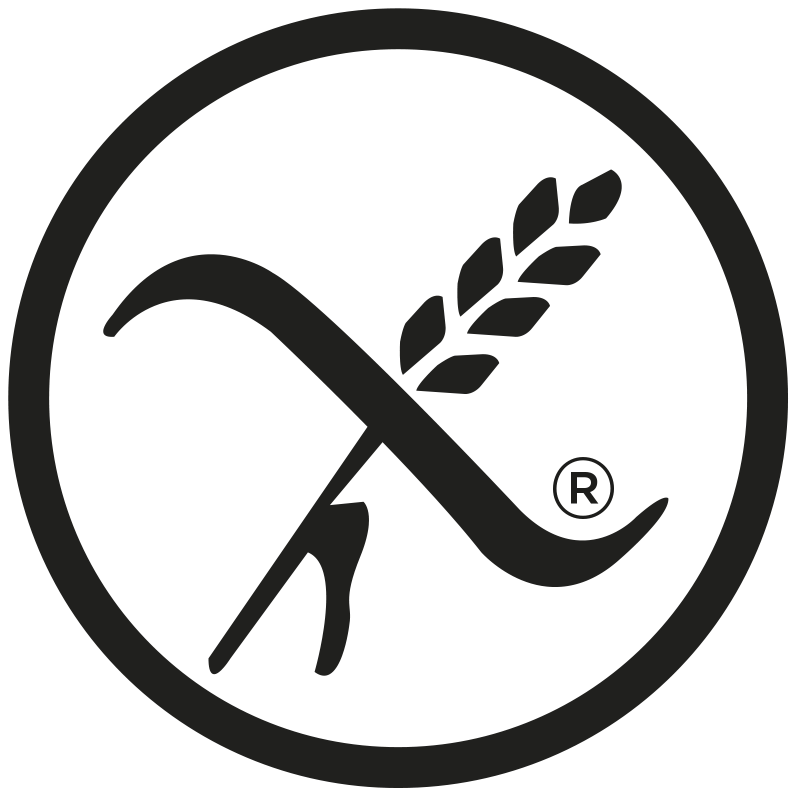
For products with a maximum of 20 ppm gluten, permission can be applied for to use the label with the crossed grain symbol. The license is European and is administered in Sweden by the Swedish Celiac Society. The symbol indicates that the product is monitored according to the common rules of the European celiac societies. Among other things, both the companies and the products are regularly inspected.
Contamination
When you start a gluten-free diet, it’s common not to be aware of all the contamination risks. For example, bread crumbs on a cutting board or flour dust from open packages in the pantry can cause you to ingest gluten without realizing it. Here are some tips to ensure a gluten-free diet:
– Always use a clean cutting board for gluten-free foods.
– Serve gluten-free foods on a separate plate or in a separate bread basket.
– Use separate serving utensils for gluten-free foods.
– Having a separate pack of butter makes it easier to avoid crumbs from regular bread.
– If possible, keep gluten-free items on their own shelf in the pantry, fridge, and freezer so they’re easier to find and keep separate from other foods.
National guidelines for a gluten-free diet
Since 2020, there have been national guidelines for nutritional treatment in celiac disease. They are primarily intended as support for all healthcare professionals and dietitians, but they are available for everyone to access here.